Welcome back!
Ready to check out?
You're just one click away from fantastic style and even better savings!
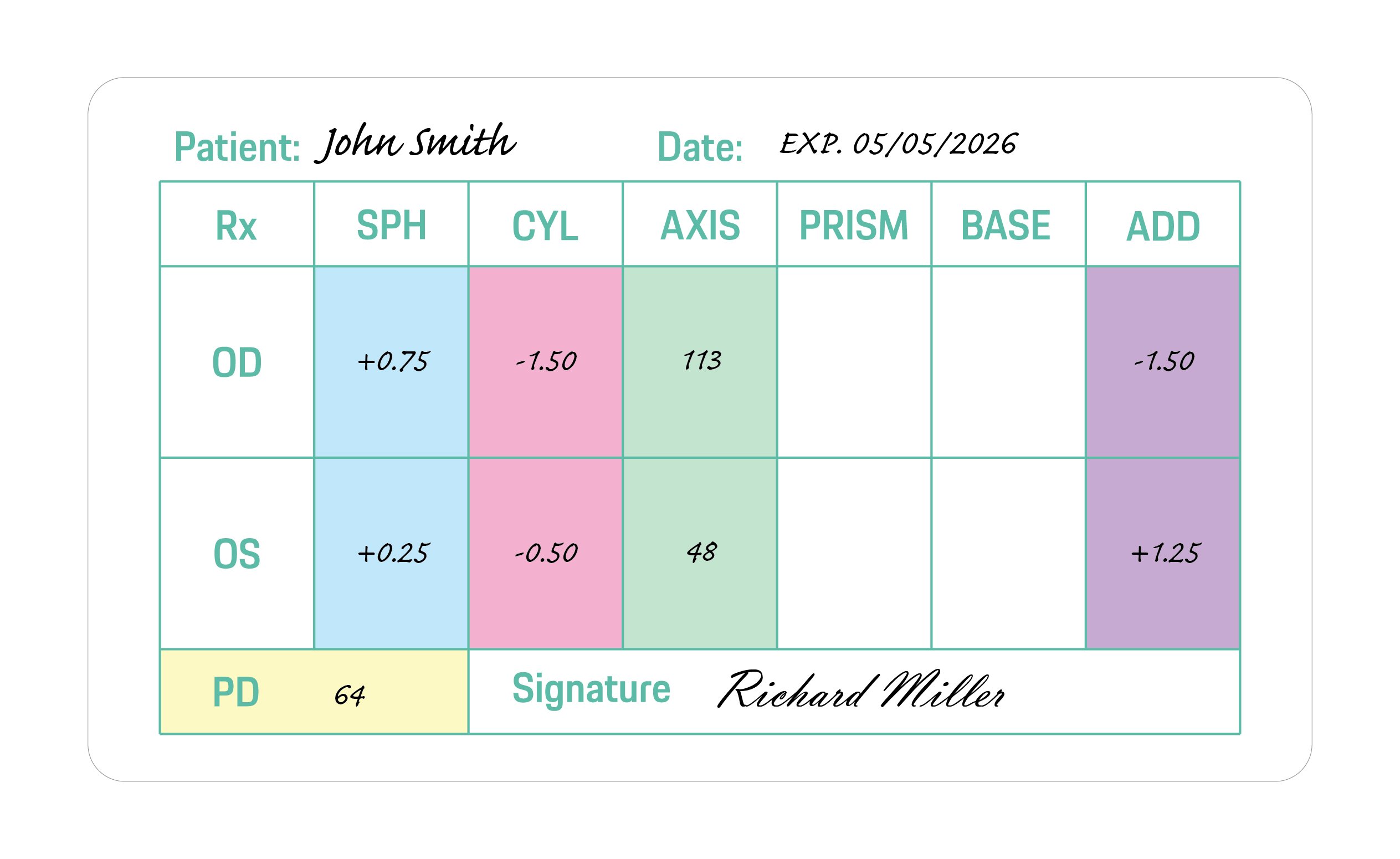
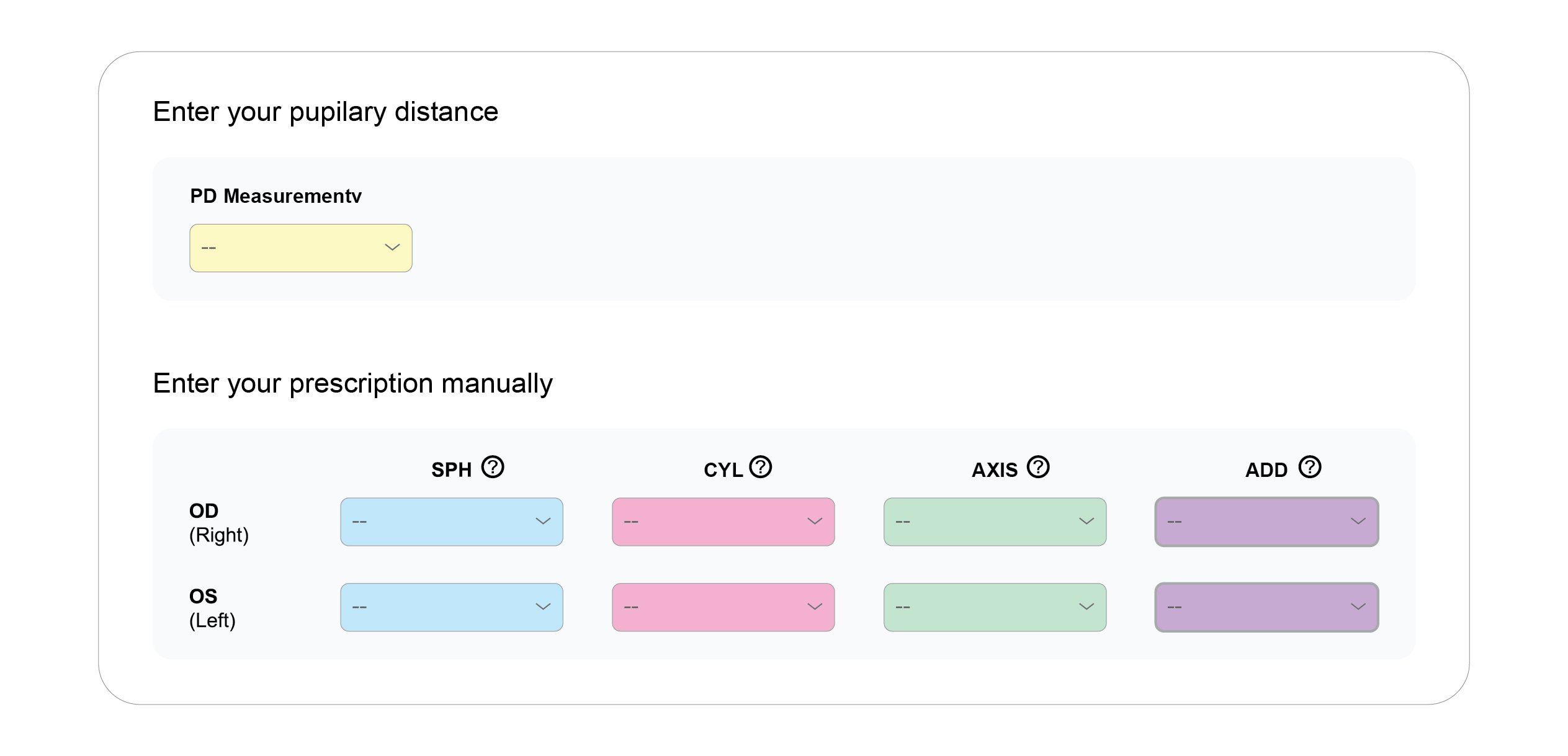
OD is an abbreviation for the Latin term oculus dexter which means right eye. Notice that the right eye information is asked for first even though we typically read from left to right.
OS is an abbreviation of the Latin oculus sinister which means left eye. That will be referenced on the far right column of the prescription.
SPH is short for sphere. The sphere of your prescription indicates the power on the lenses that is needed to see clearly. A plus (+) symbol indicates the eyeglass wearer is farsighted. A minus (-) symbol indicates that the eyeglass wearer is nearsighted.
CYL is short for cylinder. The cylinder indicates the lens power necessary to correct astigmatism. If the column has no value (is blank), it indicates that the eyeglass wearer does not have astigmatism. If this is the case on your prescription, you can leave it blank when entering it in.
AXIS is a prescription will include an axis value for those with astigmatism. This number represents the angle of the lens that shouldn't feature a cylinder power to help correct your astigmatism.
ADD is short for "additional correction." This is where details about bifocals, multifocal lenses or progressive lenses would appear.
At its core, a good Captain Claw tutorial must teach creators to breathe life into static grids. The game is divided into distinct tilesets ranging from dark Spanish dungeons (La Roca) and bustling pirate ports to treacherous underwater caverns and dense forests.
: A successful tutorial emphasizes that a level should feel like a real ecosystem. A creator cannot simply scatter floating platforms without environmental context. captain-claw-installment-tutorials
Monomyth and Mastery: Why 'Captain Claw' Level Creation Represents the Ultimate Platformer Tutorial At its core, a good Captain Claw tutorial
Released in 1997 by Monolith Productions, the cinematic 2D side-scrolling platformer Claw —famously known as Captain Claw —remains a cult classic among retro gaming enthusiasts. Centered around the anthropomorphic pirate cat Captain Nathaniel Joseph Claw, the game is celebrated for its lush hand-drawn animations, punishing difficulty, and tight controls. However, what has truly immortalized the game is not just its native campaign, but its enduring modding community. Decades after its release, community-developed level editors like Wapmap have transformed the game into an educational canvas. Writing "installment tutorials" or guides for building custom maps in Captain Claw is an exercise in mastering game design itself. This essay explores how teaching level construction in Captain Claw serves as a brilliant vehicle for understanding the intersection of player psychology, structural balance, and spatial storytelling. Spatial Storytelling Through Aesthetic Logic A creator cannot simply scatter floating platforms without
Captain Claw is notoriously difficult. Without a strategic layout, custom levels can easily devolve into frustrating, unplayable gauntlets. A high-quality installment tutorial must focus on the psychology of player movement and reward distribution.
*Discount applied on the current website price at the time of order. Offer only valid for new customer first contacts order over $10. Maximum discount of $100. Cannot be combined with any other offers. Promotions are subject to change without notice. We reserve the right to cancel orders that are in breach of the terms and conditions of this offer.



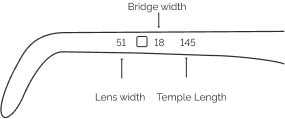
| Lens Width | Bridge Width | Temple Length | |
|---|---|---|---|
| XS | < 42 mm | < 16 mm | <=128 mm |
| S | 42 mm - 48 mm | 16 mm - 17 mm | 128 mm - 134 mm |
| M | 49 mm - 52 mm | 18 mm - 19 mm | 135 mm - 141 mm |
| L | >52 mm | >19 mm | >= 141 mm |
Buying eyewear should leave you happy and good-looking. Use our sizing tool to find frames that best fit your unique facial measurements.
Grab a regular card with a magnetic stripe on the back. Student IDs, credit cards and gift cards work well to start our online PD tool.
You may have received our paper PD measurement tool in your recent online order. In order to use this tool, place the ruler on your eyes so that the "0" lines up at the centre in between your eyes. Add up the two numbers, to get your PD. See example below:
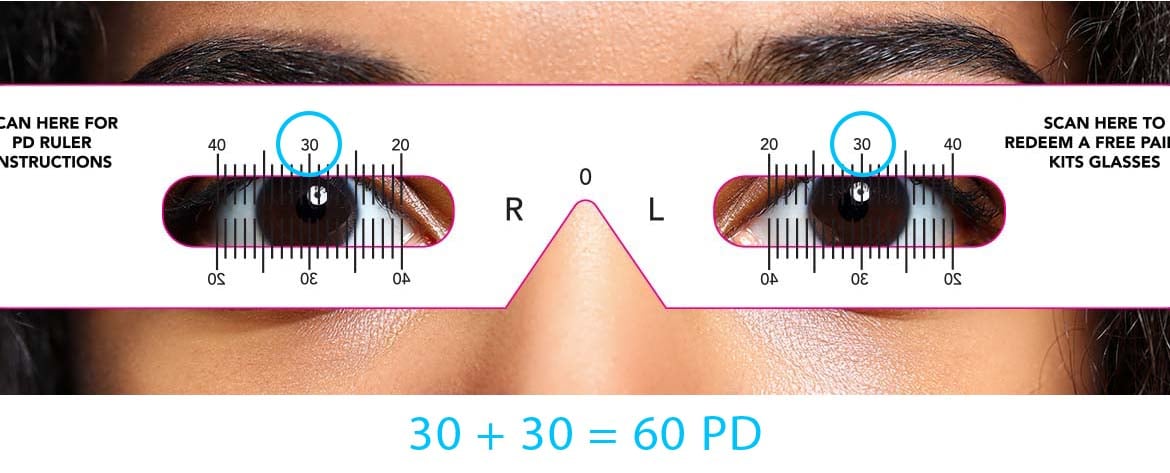
Click on this link to download and print your own PD measurement tool.
DOWNLOAD



 Check order status
 Place reorder
 Chat with us





 Use your insurance
 Help
Help