Please wait...
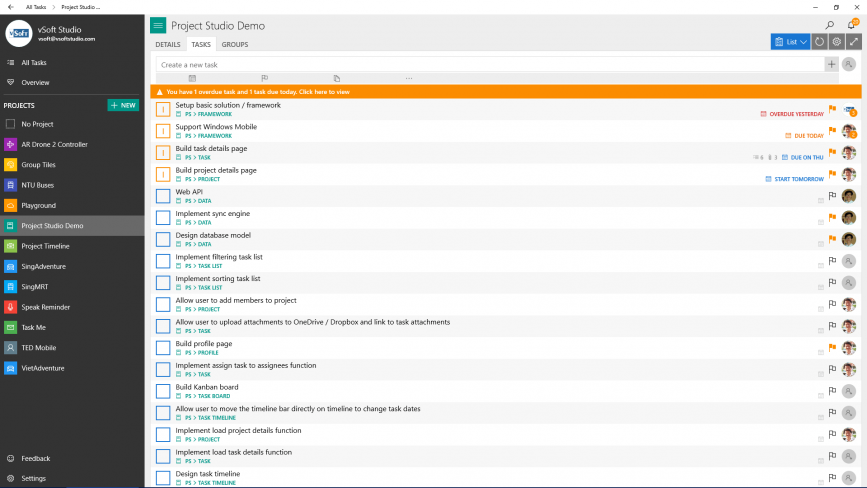
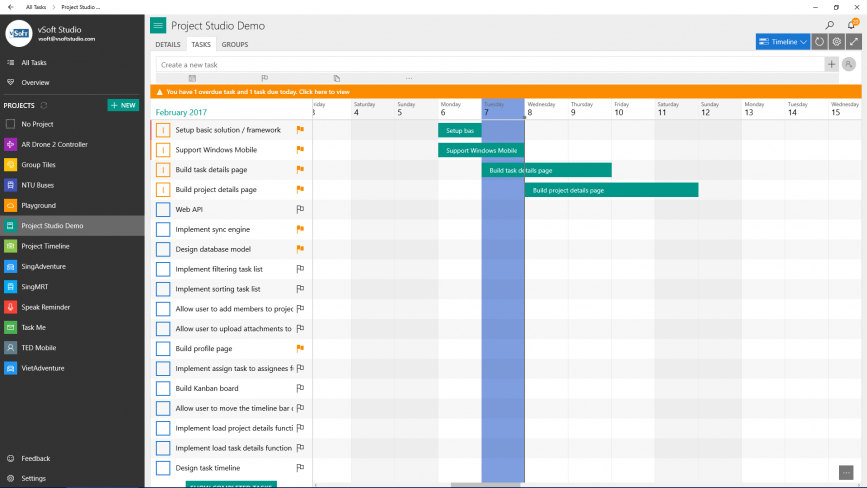
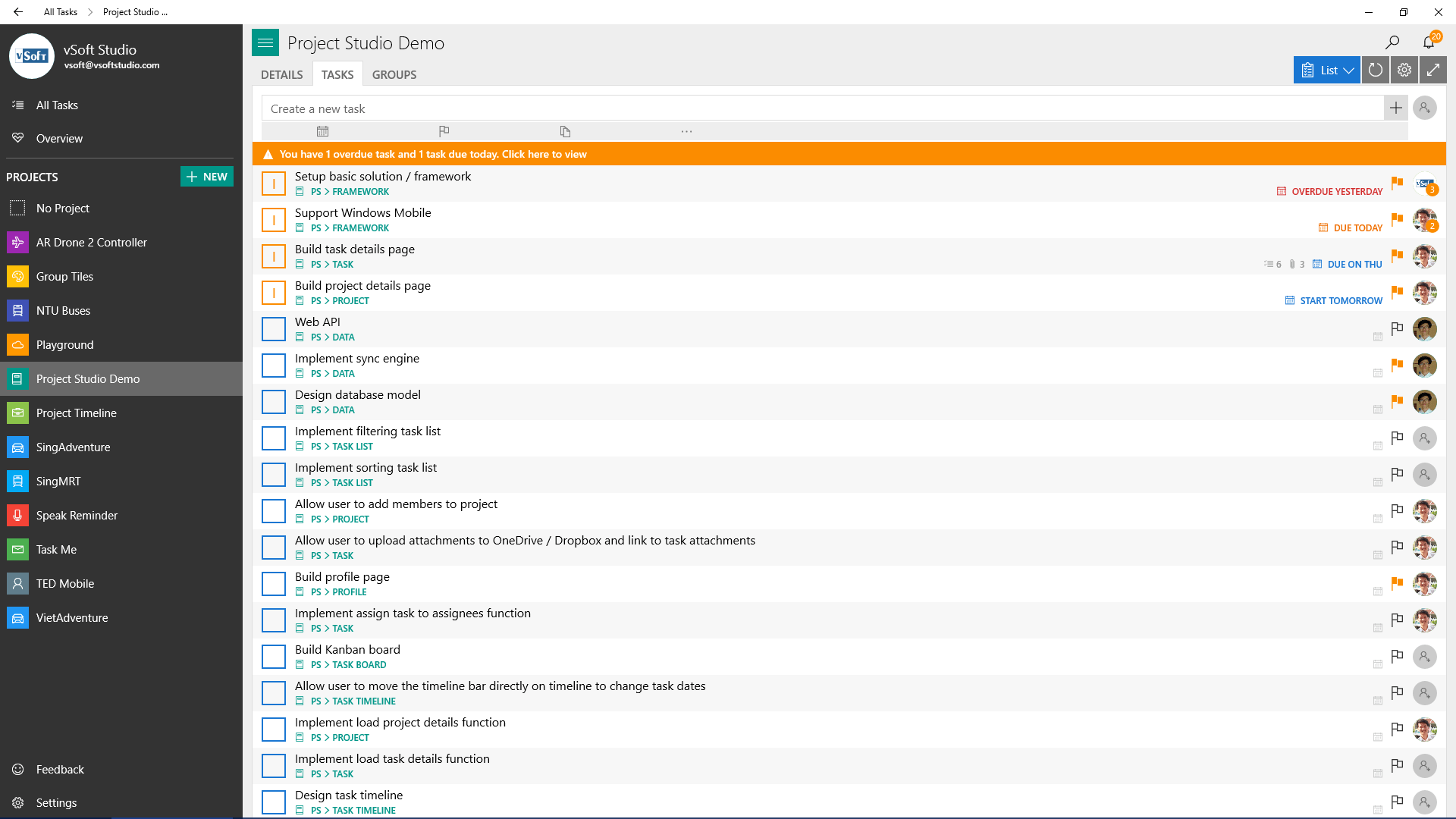
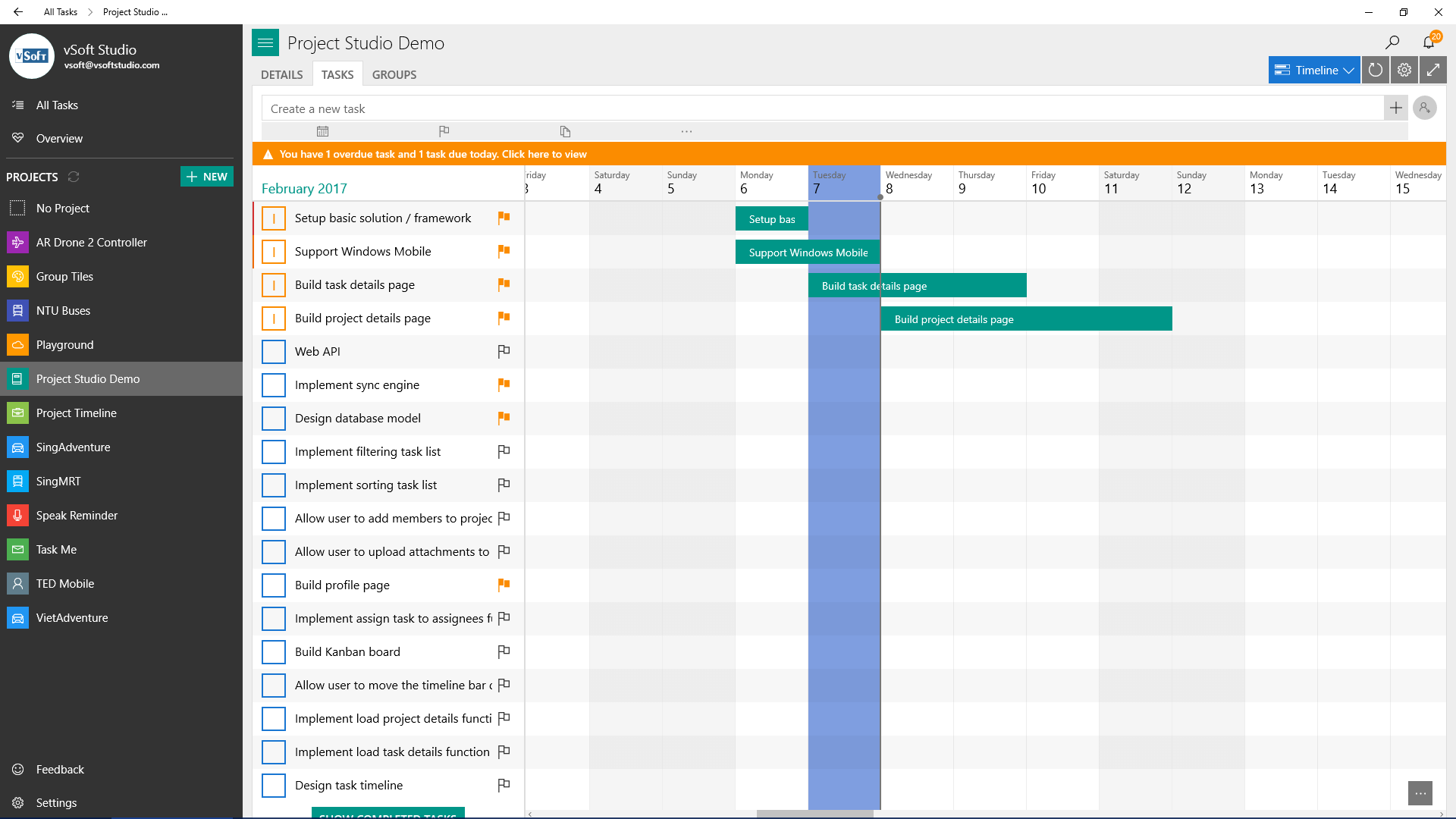
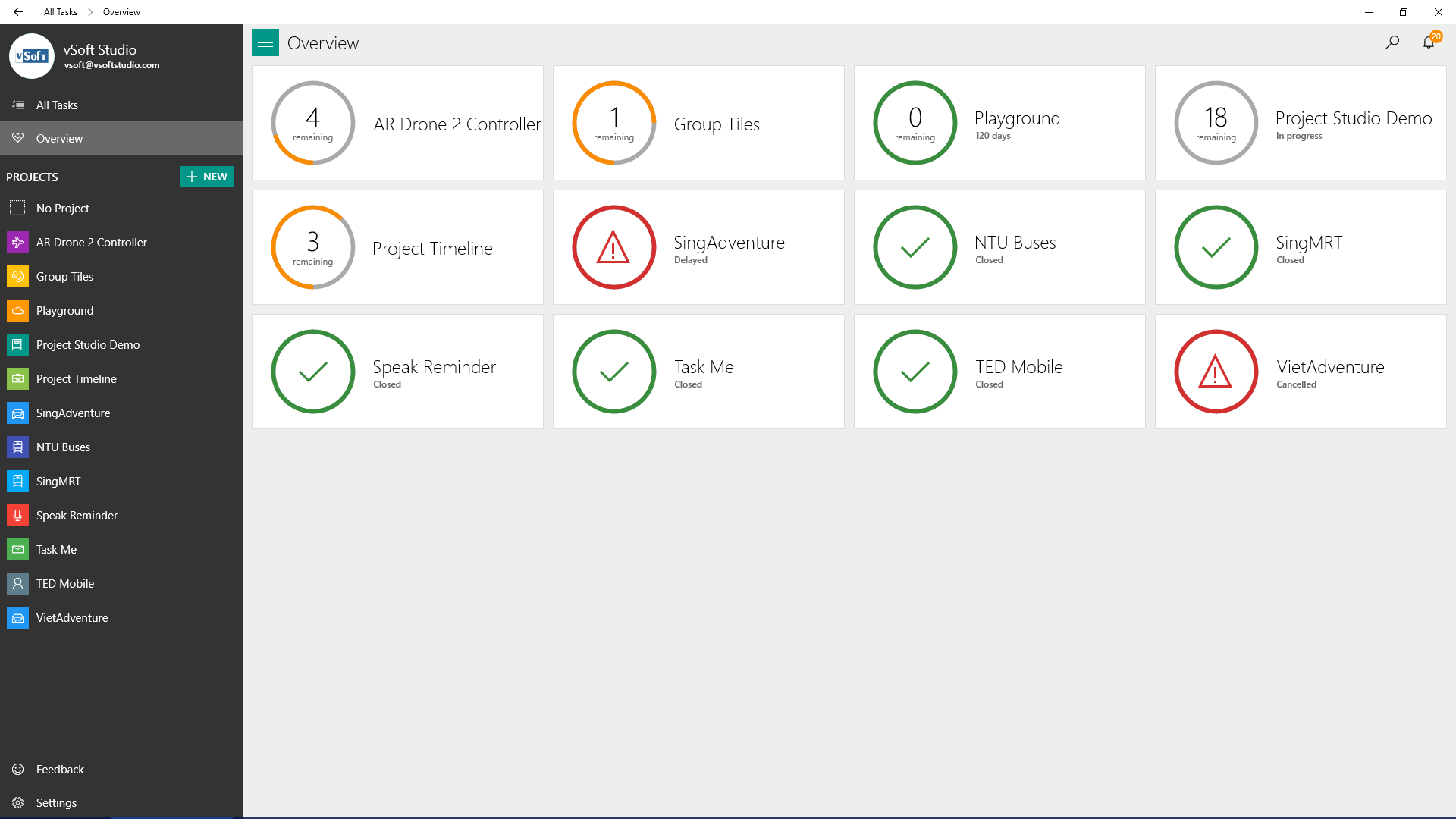
Easily switching among simple lists, timeline and Kanban board (coming soon) allows you to conveniently keep track of your projects anywhere anytime.
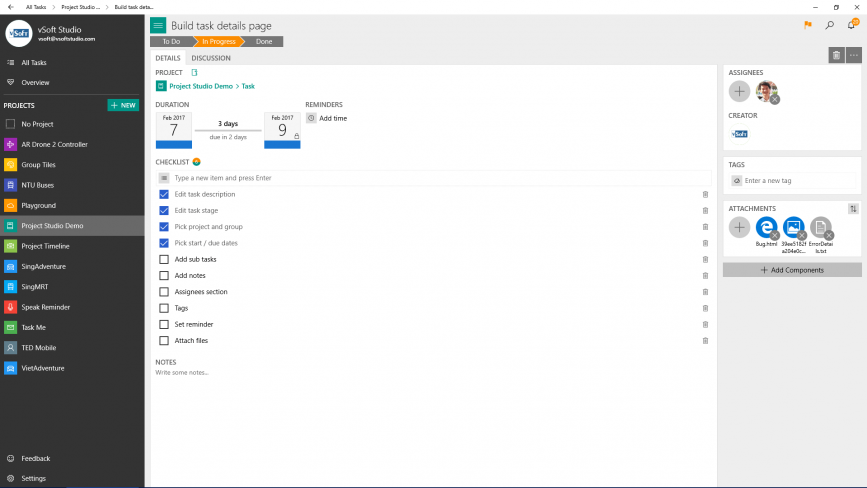
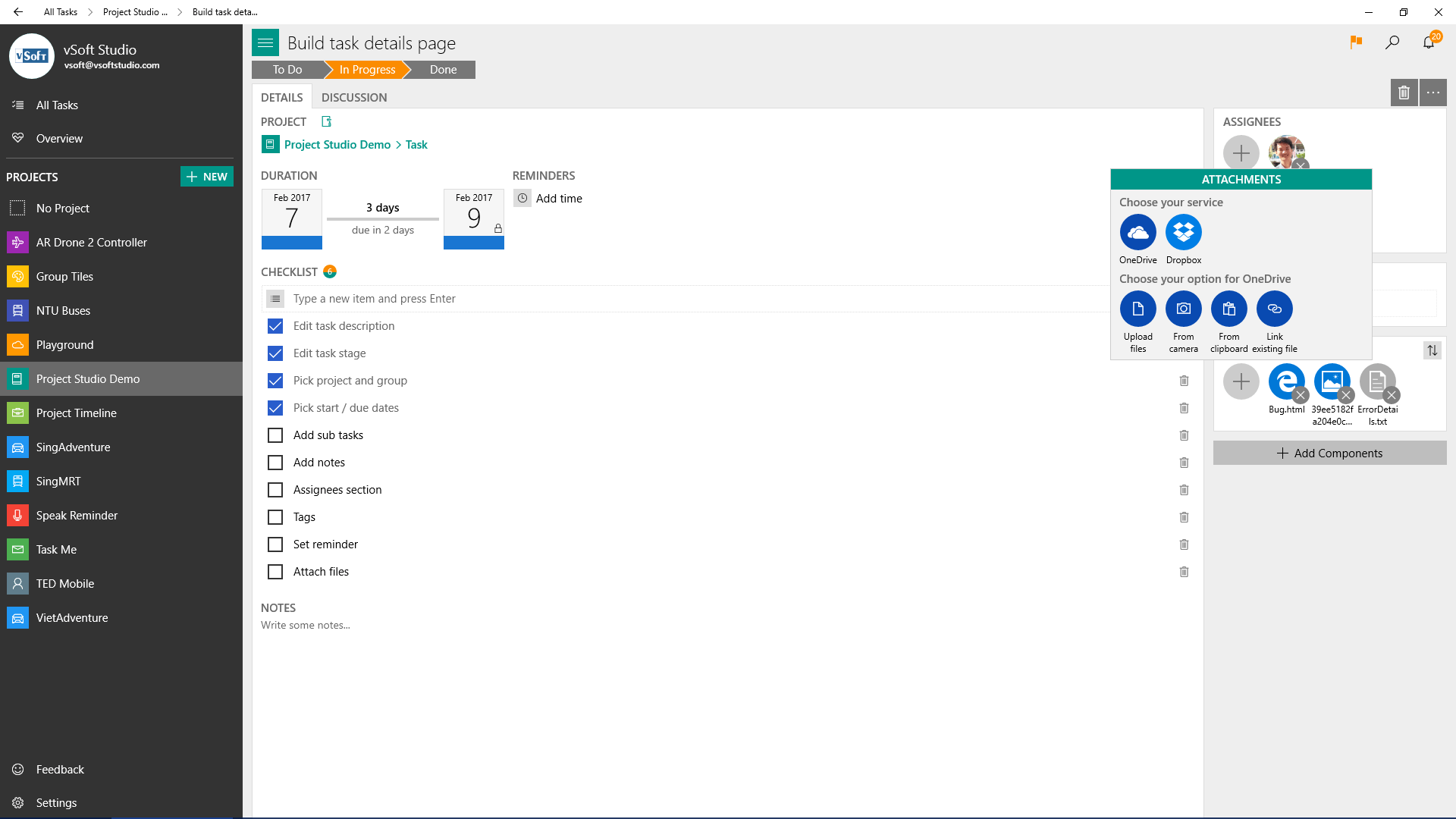
Attach any files from your OneDrive or Dropbox to any tasks, and share them with the team.
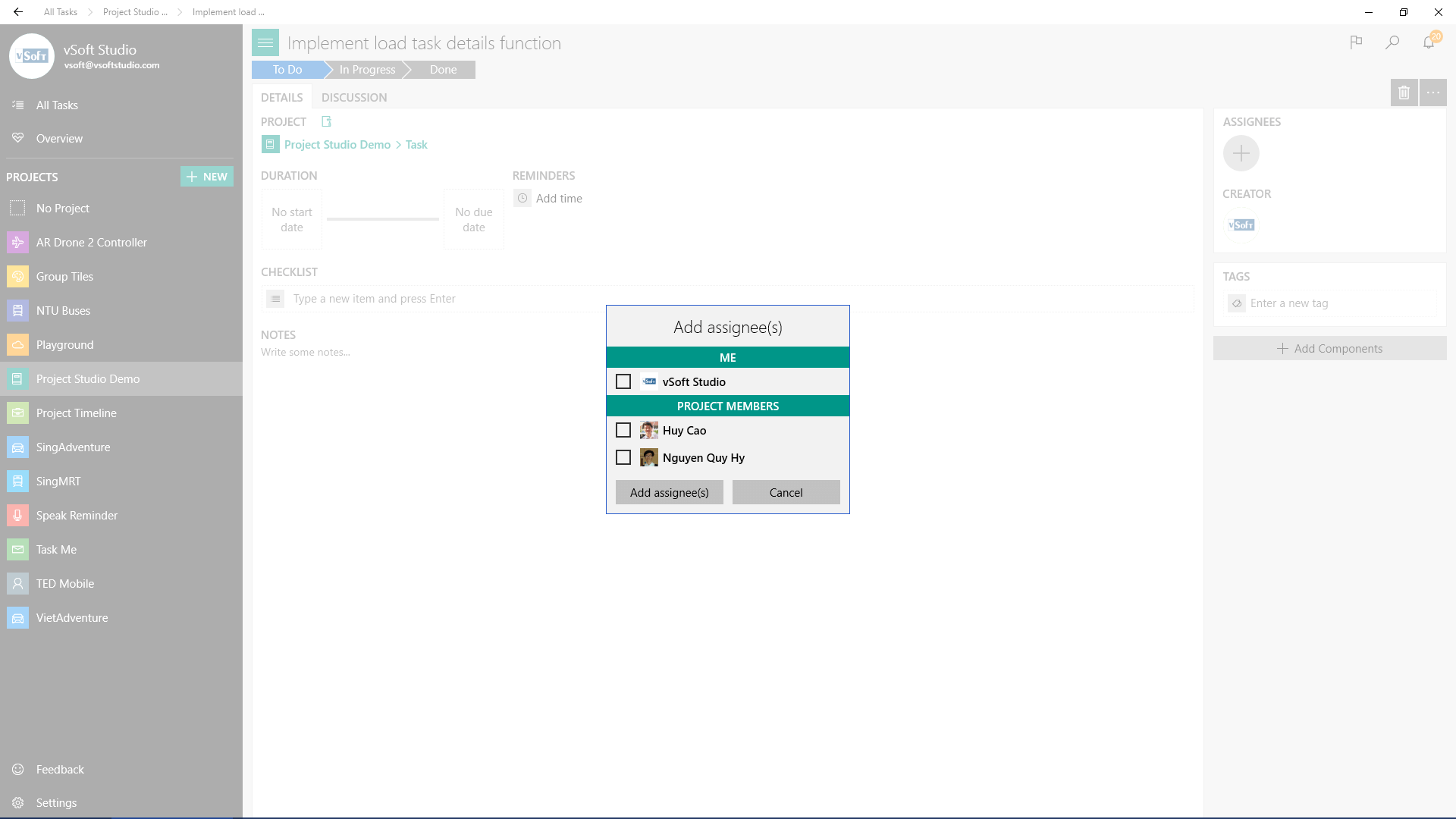
Form your team, invite your friends or colleagues to the projects and work together. You can also control who can view or edit the tasks.
Get notified instantly when you are invited to a project, have a task assigned, or your colleague has completed a task, and more activities.
Feel both comfortable and familiar while managing tasks across your 27-inch PC, 10-inch tablet or 4-inch phone.
: General information and design goals are maintained on the GNOME Wiki .
: If your ".7z" file is corrupted, the latest official source and installation requirements (Python >= 2.7, GTK >= 3.6) can be found on the D-Feet GitHub repository .
: Available on Freedesktop.org , this serves as the "paper" of record for how to properly structure the interfaces that D-Feet inspects. 3. Usage & Troubleshooting
: This paper examines D-Bus performance characteristics and methods for improvement, which is critical for real-time systems where tools like D-Feet are used for verification.
The search for a specific paper titled or associated with did not yield a direct match for a scholarly publication. Based on the naming convention, "DFeet56.7z" is most likely an archived file containing the D-Feet software (a D-Bus debugger) or a related dataset.
If you are looking for scholarly or technical information related to the tool or its context in D-Bus debugging, the following resources are the most relevant: 1. The D-Feet Tool (D-Bus Debugger)
While D-Feet is a tool rather than a paper, these academic papers discuss the technical challenges D-Feet is designed to solve:
: For a foundational overview, the article "Learning from D-Feet: a quick look at a new D-Bus debugger" by Ars Technica provides an excellent introduction to its utility for desktop application developers. 2. Scholarly Papers on D-Bus Debugging


: General information and design goals are maintained on the GNOME Wiki .
: If your ".7z" file is corrupted, the latest official source and installation requirements (Python >= 2.7, GTK >= 3.6) can be found on the D-Feet GitHub repository .
: Available on Freedesktop.org , this serves as the "paper" of record for how to properly structure the interfaces that D-Feet inspects. 3. Usage & Troubleshooting DFeet56.7z
: This paper examines D-Bus performance characteristics and methods for improvement, which is critical for real-time systems where tools like D-Feet are used for verification.
The search for a specific paper titled or associated with did not yield a direct match for a scholarly publication. Based on the naming convention, "DFeet56.7z" is most likely an archived file containing the D-Feet software (a D-Bus debugger) or a related dataset. : General information and design goals are maintained
If you are looking for scholarly or technical information related to the tool or its context in D-Bus debugging, the following resources are the most relevant: 1. The D-Feet Tool (D-Bus Debugger)
While D-Feet is a tool rather than a paper, these academic papers discuss the technical challenges D-Feet is designed to solve: Based on the naming convention, "DFeet56
: For a foundational overview, the article "Learning from D-Feet: a quick look at a new D-Bus debugger" by Ars Technica provides an excellent introduction to its utility for desktop application developers. 2. Scholarly Papers on D-Bus Debugging