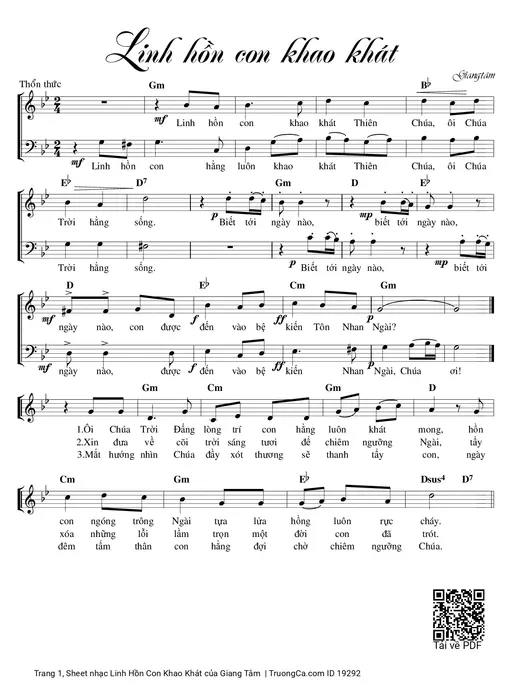
Sheet nhạc có nốt Hồn con khao khát (Thánh Vịnh 41) của nhạc sĩ Viết Chung và file PDF nốt nhạc đăng lên đây nhằm giúp các bạn xướng âm cho đúng nốt và hát thêm hay, chỉ mang tính chất tham khảo, không có mục đích thương mại. Bản quyền thuộc về tác giả và tổ chức nắm bản quyền, Truongca.com không giữ bất kỳ bản quyền của nội dung nào cả. Các bạn có thể tải về bản PDF chất lượng cao, gồm khuông nhạc có nốt với đường link file PDF bên trên.
Chọn nút dấu + để tăng tông lên nửa cung, nút dấu - để giảm tông xuống nửa cung. Rê chuột vào hợp âm để xem các thế bấm hợp âm của bài hát Hồn con khao khát (Thánh Vịnh 41).
Mặc định là thế bấm hợp âm của Guitar, hãy click vào nhạc cụ [guitar] để đổi sang xem thế bấm hợp âm cho nhạc cụ Ukulele hoặc hợp âm Piano.
Perhaps the most overlooked aspect of weight loss is the mental game. For many, eating is tied to emotion, stress relief, or social habit. True transformation requires "unlearning" these patterns. It involves moving away from the mindset of deprivation and toward a mindset of nourishment. When the goal shifts from "losing weight to look a certain way" to "gaining health to live a certain way," the motivation becomes more resilient against the inevitable plateaus and setbacks. The Environment and Consistency
The challenge of weight loss is often framed as a simple math problem—calories in versus calories out. However, anyone who has embarked on the journey knows it is far more complex, involving a delicate interplay of biology, psychology, and environment. A successful approach to weight loss isn't just about a temporary diet; it’s about a fundamental shift in how we relate to our bodies and our lifestyles. The Biological Reality
Weight management is governed by a sophisticated hormonal system. When we reduce calories, the body often triggers survival mechanisms, such as increasing "hunger hormones" like ghrelin and slowing down the metabolic rate. This is why "crash dieting" rarely works long-term; the body treats the sudden deficit as a period of famine and fights to regain the lost energy stores. Sustainable progress happens when we work with our biology rather than against it—choosing nutrient-dense foods that promote satiety and maintaining muscle mass through physical activity. The Psychological Component